19.12.2025
Renal channelopathies
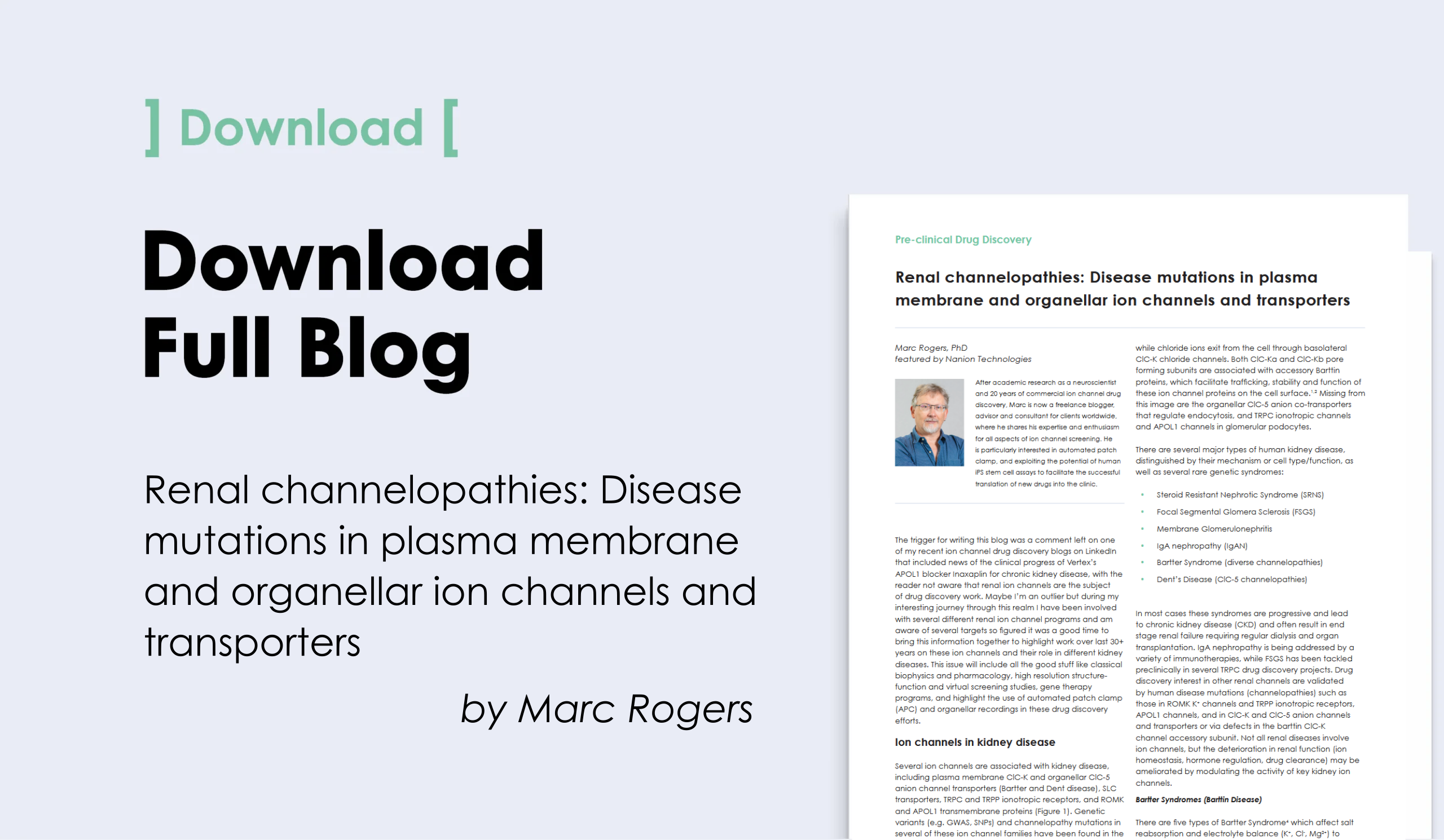
In this latest blog, Marc Rogers explores renal channelopathies, highlighting how disease-causing mutations in kidney ion channels and transporters drive a wide range of inherited and progressive kidney disorders.

After academic research as a neuroscientist and 20 years of commercial ion channel drug discovery, Marc Rogers now works as a freelance blogger, advisor and consultant for clients in the UK, EU and US where he shares his expertise and enthusiasm for all aspects of ion channel screening. He is particularly interested in automated patch clamp, and exploiting the potential of human iPS stem cell assays to facilitate the successful translation of new drugs into the clinic.
The blog reviews the growing recognition of renal ion channels as drug discovery targets, alongside recent progress in genetics, physiology, and translational models.
The article highlights how altered function of channels such as ROMK, ClC-K/ClC-5, TRPC/TRPP, and APOL1 disrupts salt handling, filtration, and cellular signalling in the kidney, leading to diseases including Bartter syndrome, Dent’s disease, FSGS, and polycystic kidney disease. It also discusses how these insights are guiding new therapeutic strategies beyond supportive care.
Case studies include small-molecule inhibitors, potentiators, and correctors, as well as emerging gene and RNA-based approaches such as ASOs, siRNA delivery, and viral gene therapies. The role of modern screening tools, including automated patch clamp and human iPSC models, is also explored.
Overall, the blog provides a clear and accessible overview of why renal ion channels represent an underexplored but highly promising area for kidney drug discovery, and how advances in technology are helping to move these targets closer to the clinic.