
2021 - Research Grant Recipient (Europe)
Meet Jonai Pujol [ Video Announcement ]
University of Bern, Switzerland
2021 - Research Grant Recipient (Europe)
Meet Edmund Kunji [ Video Announcement ]
University of Cambridge, UK
2021 - Research Grant Recipient (USA)
Meet Lei Zheng [ Video Announcement ]
University of Texas - Houston, USA
2021 - Research Grant Recipient (Australia)
Meet Ronald Clarke [ Video Announcement ]
University of Sydney, Australia
2019 - Research Grant Recipient (Europe)
Meet Prof. Dr. Camilo Perez
Biozentrum - University of Basel, Switzerland

Nanion:
Hi Camilo, congratulations on your win! What are you planning to do with SURFE2R N1 in your laboratory?
Camilio Perez: “ In my laboratory we investigate membrane proteins involved in cell wall biosynthesis of bacterial pathogens. Some of these membrane proteins are transporters for which there is no biochemical or biophysical characterization available. Thus, one of the experiments we want to do with the SURFE2R setup is to characterize kinetic parameters of transport processes mediated by these proteins and variants. Usually one will use radiolabeled compounds to do this but performing high-throughput assays could be costly and demanding. In this sense, the SURFE2R setup is much more robust and will allow us to perform multiple experiments in a quick way and using less material. In addition, we are interested in developing novel inhibitory molecules targeting these transporters. A SURFE2R setup will allow us to screen multiple of these molecules. Our plans are to pre-select inhibitors and later study their effect on bacterial pathogens by in vivo assays. Thus, the SURFE2R setup can help us to narrow the window of compounds with interesting inhibitory properties. In addition, we will complement these studies by determining structures of the target proteins and to elucidate mechanisms of inhibition.”
Nanion: Why did you apply for the SURFE2R N1 Grant?
Camilio Perez: “During my PhD-studies, I used a previous version of the SURFE2R setup, which worked pretty well. I also know colleagues that have used it and they seem to be satisfied. Also, SSM is superior to other electrophysiological techniques in the sense that it allows to measure very low currents, as those expected from secondary transporters. Due to this, I was looking forward to trying one of the new SURFE2R setups on my own research lab. The SURFE2R grant was the perfect way to get one and see how the technique has been optimized.“
Nanion: Which properties of the SURFE2R will be of benefit to your research?
Camilio Perez: “A SURFE2R setup will allow us to perform high-throughput experiments using multiple non-labeled compounds. Also, it will also allow us to study the function and inhibition of secondary transporters in a native-like environment. With the SURFE2R setup we will be able to characterize the currents and kinetic parameters of diverse secondary transporters and pre-select inhibitory compounds that later will be studied using in vivo assays on bacterial pathogens.”
Read more about Prof. Dr. Camilo Perez’s research here.
2019 - Research Grant Recipient (Europe)
Meet Prof. Dr. Dimitrios Fotiadis
Institut für Biochemie und Molekulare Medizin - University of Bern, Switzerland
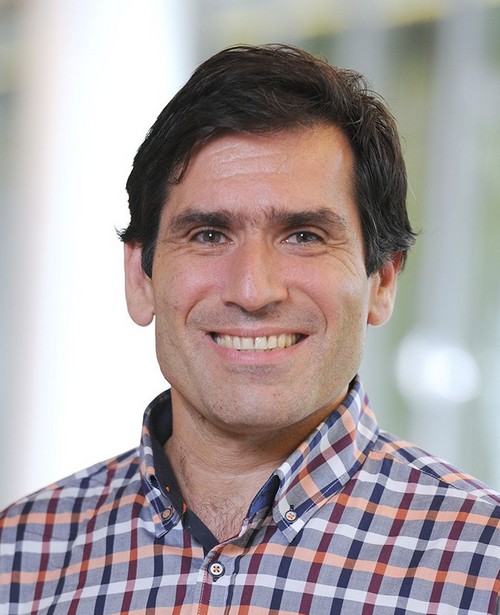
Nanion: Hi Dimitri, congratulations to your win! What are you planning to do with SURFE2R N1 in your laboratory
Dimitrios Fotiadis: “We are very happy to have won the SURFE2R N1 Grant and excited to test this promising technology. In a first step we will test several of our transporters that we have reconstituted into liposomes to evaluate the potential of the SURFE2R N1.”
Nanion: Why did you apply for the SURFE2R N1 Grant?
Dimitrios Fotiadis: “In our laboratory we work on the structure and function of solute carriers (SLCs). Functional studies are ideally performed in a well-defined system, i.e., in proteoliposomes. However, most of the commonly used assays with proteoliposomes are not straight-forward and provide ambiguous results, e.g., fluorescence-based assays. Other assays such as radioligand-based transport assays work nicely, but radioligands are very expensive and numerous radiolabeled substrates for SLCs are not available commercially. In summary, the SURFE2R N1 would represent an excellent and label-free solution for the described issues.”
Nanion: Which properties of the SURFE2R will be of benefit to your research?
Dimitrios Fotiadis: “One of the great features of the SURFE2R N1 is that no radioligands are needed to measure transport function. Therefore, the SURFE2R N1 will provide the possibility to measure numerous substrates of low to high structural complexity without needing corresponding radioligands. This feature is of course also highly interesting from a financial point of view since radioligands are very costly. Another feature is the fast read out of the SURFE2R N1 that we are excited to explore – transport measurements are performed within a few seconds. Finally, we are pretty sure that the SURFE2R N1 reserves more benefits that we will discover in the upcoming training days carried out together with experienced scientists from Nanion.”
Read more about Dimitrios Fotiadis’s research here.
You can now read the official press release here.
2018 - Research Grant Recipient (USA)
Meet Prof. Dr. Randy Stockbridge, Assistant Professor
University of Michigan, USA
“We wanted to characterize the electrophysiological characteristics of our new family of transporters to find out properties such as Km and Vmax of the substrate, and ideally to screen a set of substrates for transporter activity. However, given our difficulties in developing a transport assay, I was pessimistic that we were going to be able to move beyond radiolabeled substrates.
Contrary to my expectations, electrophysiology with the SURFE²R N1 platform worked right away. We saw very robust currents in our pilot experiments during the initial training session on the instrument.“
2018 - Research Grant Recipient (USA)
Meet Nathan Thomas
5th Year PhD student at University of Wisconsin-Madison, USA (Dr. Henzler-Wildman's lab)
“We started collaborating with Nanion after receiving the Nanion´s SURFE²R N1 grant in 2018. The SURFE²R N1 has generated terrific functional data from the very first day it was installed in our lab. In general, it's very reliable and easy to use. Also, whenever we have run into issues or had questions about results, Nanion has provided prompt and helpful support”